SargasFoam makes plastic-free molded foam inserts from Sargassum seaweed, for brands looking for more sustainable cosmetics packaging. For beauty and fragrance brands it replaces the white EPS and PU foam inserts that hold glass jars, perfume bottles, refill systems and gift sets, without fossil plastic and with a natural, premium feel.
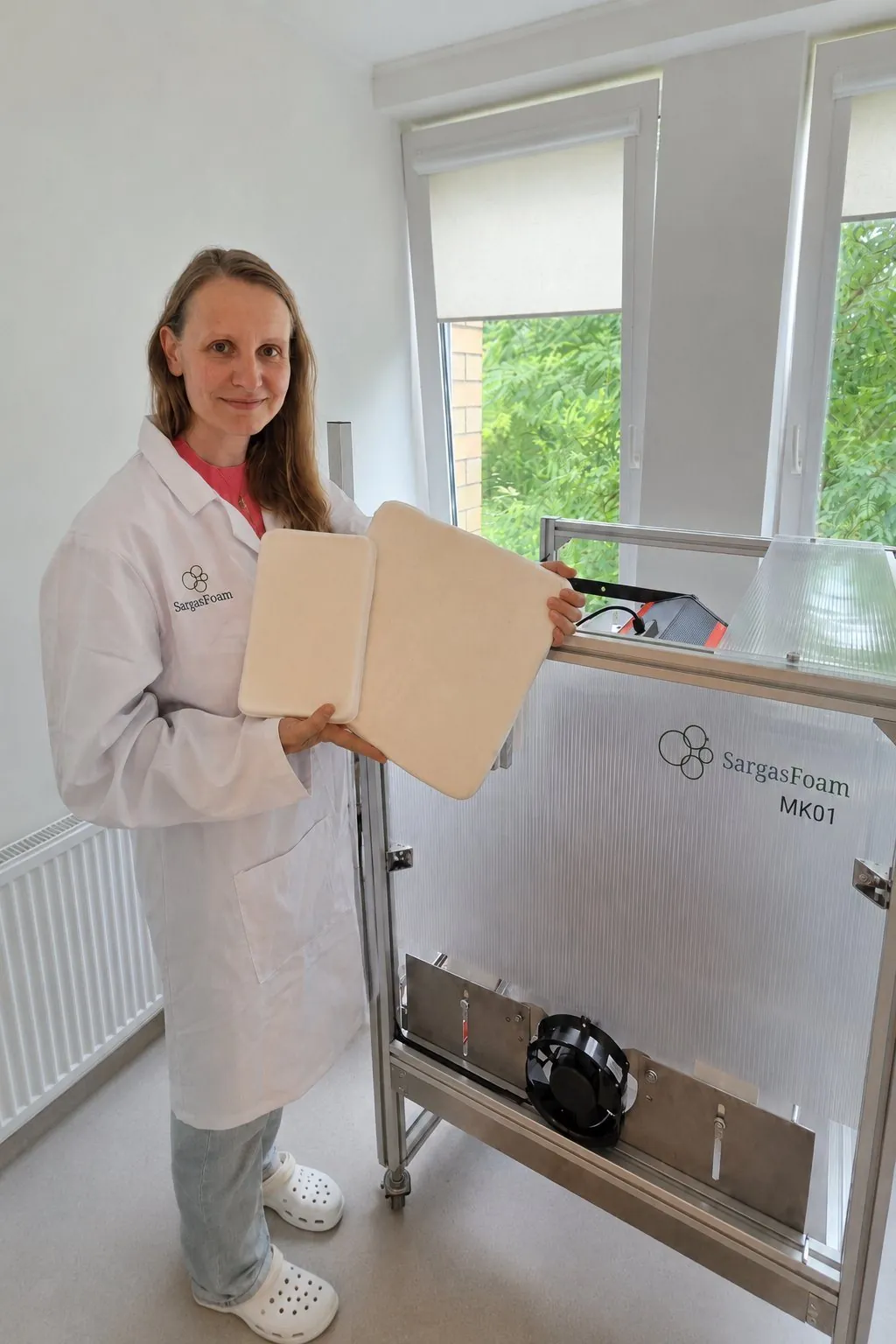
What we make for beauty packaging
- Molded fragrance and skincare inserts with custom cavities for each bottle, jar or cap
- E-commerce inserts that protect glass and pumps through parcel shipping
- Separation trays for refill systems and multi-product kits
- Gift-set inserts for premium unboxing, with the finish checked on samples first
Why brands look at seaweed foam
A foam-like insert without fossil foam. Molded fibre is renewable but often looks rough and brown. Seaweed foam aims at a light, foam-like look with a renewable raw material. Surface finish is still being refined at pilot scale, so judge it on samples.
A raw material with a story. Sargassum blooms reached a record of about 37.5 million tonnes in the Atlantic in 2025. Much of it washes up on beaches, where it has to be removed. Turning it into packaging gives a specific, checkable origin story.
Regulatory direction. The EU Packaging and Packaging Waste Regulation (PPWR) has applied since 12 August 2026 and pushes packaging towards recyclability and less plastic. Brands are planning their move away from fossil foam now. Our guide to PPWR-compliant packaging for cosmetics sets out the dates and what to check.
What to look for in sustainable cosmetics packaging
No single material is the most sustainable for every product. These four checks usually matter most:
- Less material: the lightest and smallest pack that still protects the product.
- A real end of life: a recycling or waste route that exists in the markets where you sell.
- Evidence: certificates and test reports, rather than general claims.
- Protection: a broken bottle wastes far more than the insert saved, so test on your own product.
Where SargasFoam stands today
We are at lab and pilot scale in Lithuania and have signed two letters of intent for pilot projects, with a further LOI and an MoU being signed (October 2026). Internal testing shows at least 85% bio-based content; EN 16640 and EN 13432 certification is in progress. We validate protection on your product before any production commitment.
How a pilot works
- Samples: test finish, feel and density with our sample grades (€50 per grade).
- Fit call and NDA: product dimensions, packing line and protection requirements.
- Prototype insert: a first molded geometry for your product.
- Trial report: drop, compression and handling results with a next-step plan.
Frequently asked questions
What is the most sustainable packaging for cosmetics?
There is no single best material. The strongest option depends on the product, the markets where it is sold and the waste routes available there. Start by reducing material, then choose materials with a real end-of-life route and documented evidence, and test protection on the actual product.
Can seaweed foam replace EPS inserts in cosmetics packaging?
SargasFoam is developed as a plastic-free alternative to EPS and PU foam inserts, with hardness comparable to protective EPS, with molded cavities for jars, bottles and gift sets. Protection depends on product weight and geometry, so each application is validated with the brand's own product in a pilot before production.
What is SargasFoam made from?
SargasFoam is made from Sargassum, a floating brown seaweed that washes up in large volumes on Caribbean and West African coasts. Internal testing shows at least 85% bio-based content by weight.
Is SargasFoam certified compostable?
Not yet. Certification of bio-based content (EN 16640) and industrial compostability (EN 13432) is in progress. Brands should only use certified claims on pack once certificates are issued.
Does SargasFoam help with the EU PPWR?
Moving away from fossil foam supports PPWR goals on recyclability and plastic reduction, and fitting PPWR requirements is a design objective for SargasFoam. Compliance for a specific pack must still be confirmed through testing and conformity assessment.
How do we start a pilot?
Order samples (€50 per grade, shipped from Lithuania within 3–5 business days) to test finish and feel, then share product dimensions and protection needs. SargasFoam develops a prototype insert and a test report with you, followed by a short non-binding pilot agreement.
Test seaweed foam on your own product
Order samples or ask about a pilot for your next fragrance or skincare launch.
Order samples →Read more
PPWR-compliant packaging for cosmetics: what brands must check
Protective packaging for glass perfume bottles: tests, UN 1266 and insert design
PPWR rules for protective inserts and void fill
EPS foam alternatives compared: molded fibre, mycelium and seaweed foam
Bio-based packaging inserts for beauty brands: 2026 guide
How to request and test packaging foam samples
What is Sargassum seaweed, and why use it for packaging?